

Domaine de la Côte
Sorry, but you do not meet the minimum age requirement to view this website.
“Design,” said Charles Eames, the mid-century American designer, “depends largely on constraints.” Anyone who’s ever created something can agree that having an imposed boundary—subject, cost, or other stipulation—as opposed to an open-ended blank canvas makes creation easier and better. Indeed, Leonardo da Vinci once said: “Art lives from constraints and dies from freedom.”
The same could be said about the greatest wines. They are never the product or expression of abundance. Rather, they are the result of a process much more demanding. DDLC’s Juliet, in my sincere opinion one of the finest Chardonnays of North America, is a prime example of this truth. And this isn’t by accident. The wine was designed to become this. To understand why, you have to understand where the wine comes from—not just the vineyard, but the idea behind it.
In his approach to fine wine, Sashi’s touchstone has always been Lalou Bize-Leroy. Early in his winemaking career, he had chances to drink Domaine Leroy—something almost impossible for most people today—and the experience never left him. “I can vividly remember those wines,” he says, “and just the enormous level of concentration. Not the concentration you taste in [modern American cult wines]. It’s a concentration that happens because each vine produces a small amount of grapes.” He is blunt about the implications: “It’s surprising to me how many people today still try to argue that point—that yields don’t matter that much, that it has more to do with farming or winemaking. I find that all so nonsensical.” For Sashi, Leroy’s wines exist on a different register. And Juliet Chardonnay, he says, “is in many ways a total homage to Lalou.”
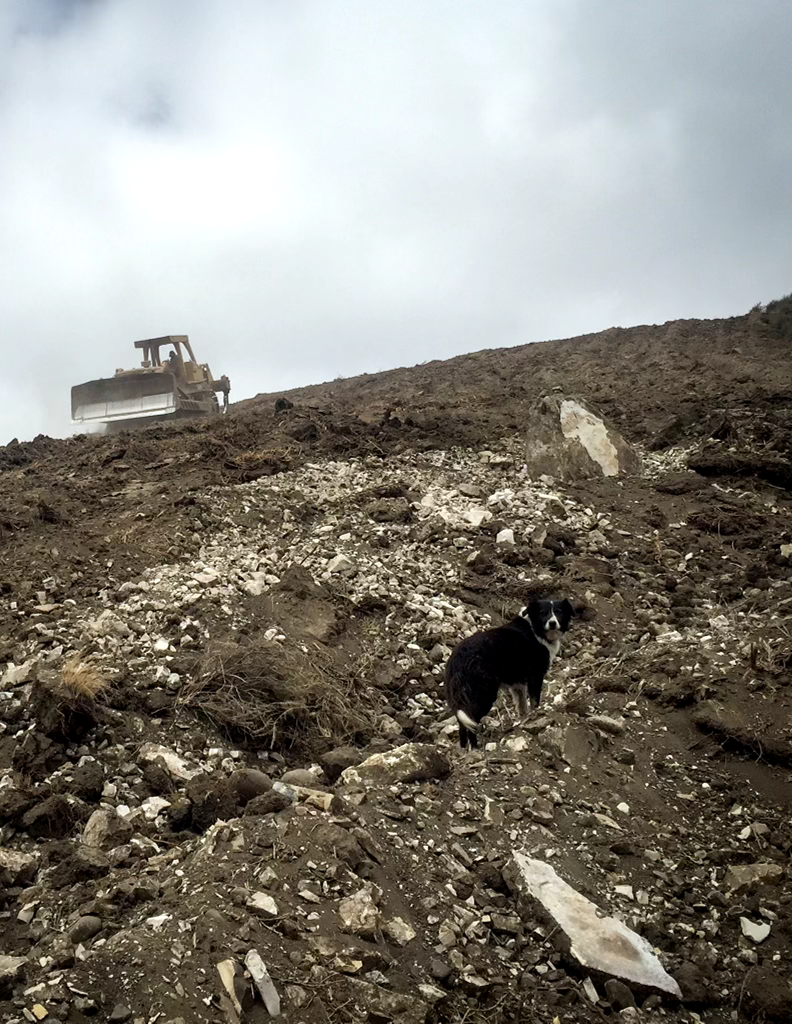
At the western edge of the Sta. Rita Hills, on the steep slopes of the Domaine de la Côte estate, Sashi and his team first tried planting Chardonnay at the very top of the hill, a block they call Siren’s Call, hoping the extreme elevation would produce the punishingly low yields they wanted. It didn’t work. The wind and temperatures at that altitude created a chill effect so severe that the pollen could never manage to pollinate the ovaries. The vines flowered but could not set fruit. Later, while walking the property with Sashi, then-employee Chris King pointed to an area just below Siren’s Call. It was extremely steep, but more protected from the wind. And the ground, when they walked through it, was full of shale. This became Juliet.
The vines they planted there did indeed grow slowly, more slowly than anything Sashi had seen. In the viticultural world, he says, they are the equivalent of bonsai: tiny, restricted from water and nutrients, receiving adequate sunlight, but having a very difficult time overcoming the terroir. The vegetative growth is so modest that a visitor might wonder whether the vines are sick. They are not. They are simply contending with a place that does not make their lives easy.
This is a distinction worth noting. Farmers have long understood that you can improve wine quality by dropping fruit, cutting away clusters so that the vine directs more energy into fewer grapes. It works—to a degree. But there is no substitute for a vine that does this on its own, constrained not by human intervention but by the site itself. Concentrated coffee from inferior beans is just stronger coffee.
Sashi and his team didn’t know exactly what would happen at Juliet, but they had an informed bet. Their experiences at Bentrock and Rita’s Crown taught them “that diatomaceous shale has a strong influence on vine growth,” Sashi says. “So we knew the vines would grow very slowly in that spot.”
What they may not have fully anticipated is the degree to which the site would rewrite the vine’s priorities. Grapevines are ancient organisms, part of a genome of plants that, left to their own devices, would rather grow leaves and wood than produce fruit. They want to get big. When you force that genetic predisposition into an environment where growth is nearly impossible, you change the energy balance entirely. The vine can no longer afford to spend on canopy. “That’s the secret of Juliet,” Sashi says. “We’ve found a spot where the energy of the plant is naturally balanced between fruit and vegetative growth. And when you achieve that, you get extraordinary focus on the fruit, and just amazing concentration.”
And here is where Chardonnay’s particular nature becomes essential. Chardonnay, as Sashi puts it, “has an absence of its own flavor.” When you concentrate this neutrality, “you’re not really concentrating flavor. You’re concentrating essence.”
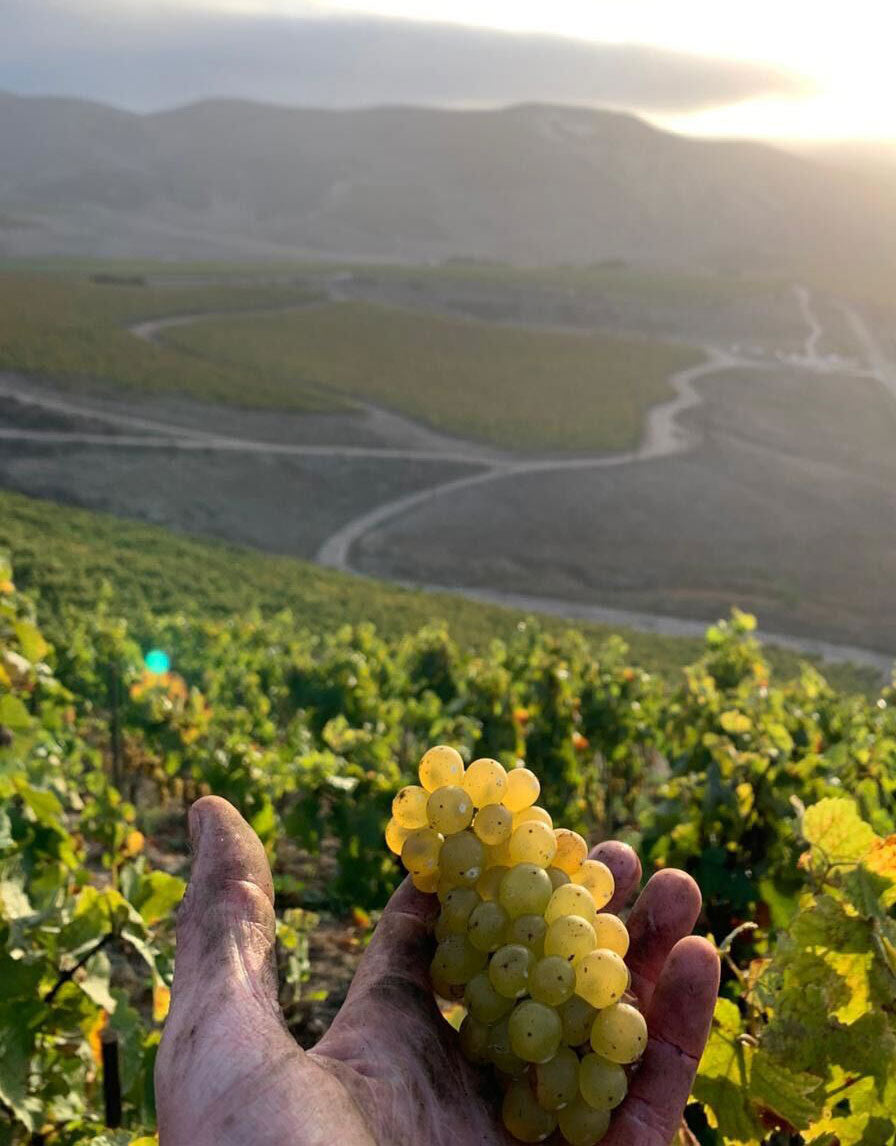
"Unforgettable purity and definition, with fabulous concentration to the deeply textural fruit and lingering, precise and flinty minerals that filigree lemon pith, yellow apples and hazelnuts. Counterpoints of lifted spice and blossoms add to the nuanced layering of the long finish. Drink or hold, but patience will be richly rewarded."
This is something I marvel at every time I taste Juliet and other elite Chardonnays. Ironically, these wines’ crystalline transparency obscures the impact of their enormous power. A power which comes in layers of texture, depth, and mineral tension that seem to emanate from some sort of quantum field rather than a physical source. It’s almost miraculous: whatever creates Chardonnay’s complexity is contained entirely in its juice, not, as with most wines, in the skin.
Another element of the wine’s design is that the vine material, too, was chosen to sharpen rather than soften those constraints. Every Chardonnay Sashi considers among his best work—the Summum at Evening Land, the finest lots from Rita’s Crown and Bentrock, and Juliet —is from Clone 76. It is not a popular selection. Most people who plant Chardonnay want decent production, and Clone 76 is far too shy-bearing for that. It produces less fruit than Wente, less than Hyde, less than Mount Eden. That is precisely its virtue: a naturally low-yielding clone in a naturally low-yielding site. Restriction upon restriction.
And then there is the rootstock. Because the vineyard is, as Sashi puts it, “basically just rocks,” they chose 1103 Paulsen, one of the most vigorous rootstocks available, knowing the site would require as much subterranean strength as possible just to survive. So you have a shy-bearing clone grafted onto a vigorous rootstock, planted in a site that suppresses vigor. Forces working against each other and together, constraint meeting counter-constraint. A carefully engineered set of tensions through which the vine delivers resolution.
The winemaking behind Juliet, Sashi says, is almost beside the point. This vineyard can make no other wine than the one in the bottle. But for those interested in the details, I consulted managing winemaker DJ Bilsky, who oversaw fermentation and elevage.
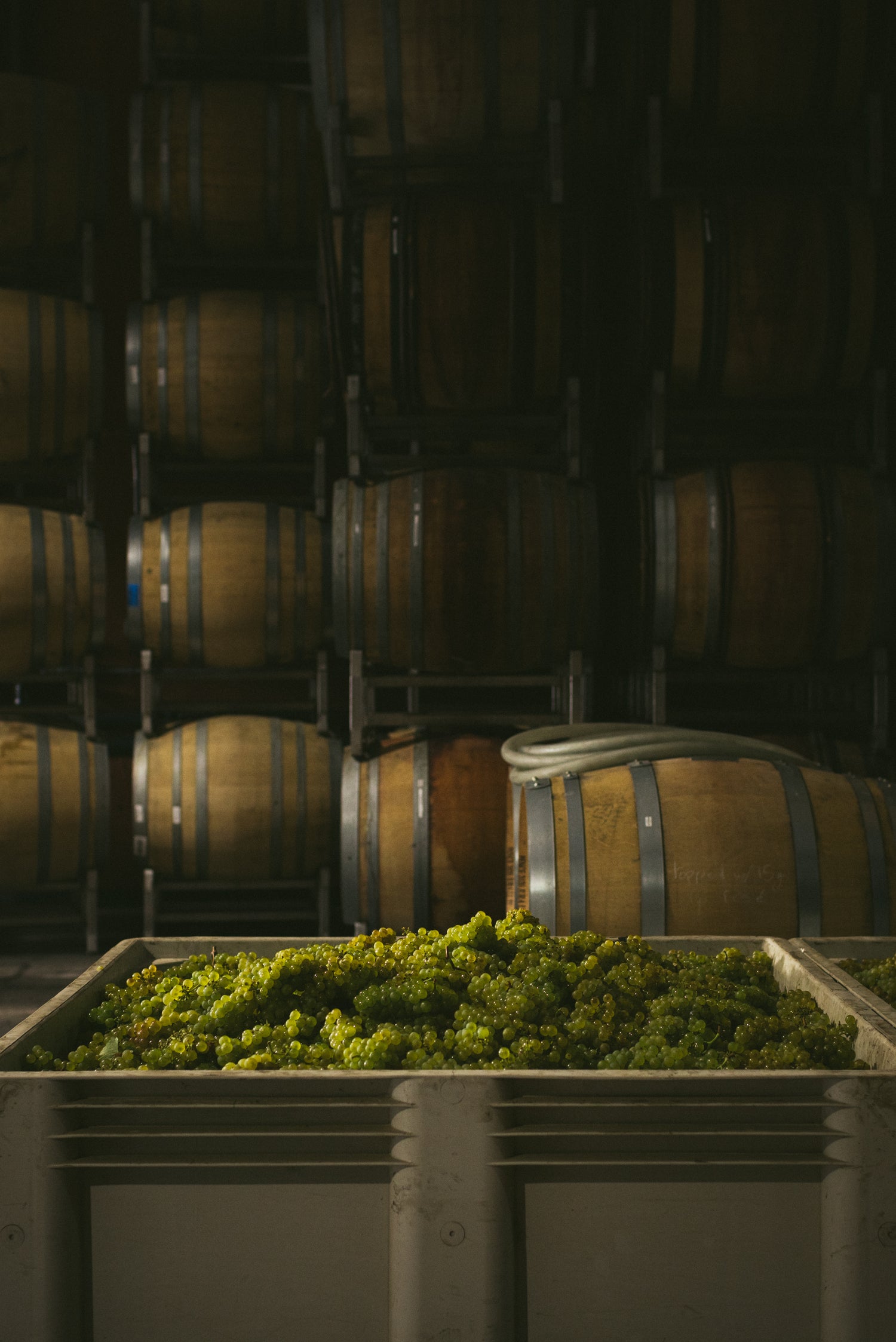
In the cellar, DJ says, the winemaking confirms the philosophy: do as little as possible to material this good, and do it with full attention. Juliet is the last block picked each harvest—the finale of Domaine de la Côte’s season—gathered early in the morning and delivered to the winery five minutes away. The grapes receive a light crush to break the skins and spend roughly twenty minutes in contact before pressing. Only the heart of the press cycle—the free-run juice, separated by taste and pH monitoring—goes to the cuvée. Within an hour, the juice is in barrel. For the 2023 vintage, that meant one new 500-liter Stockinger puncheon and two new 228-liter Damy barrels. Indigenous yeasts ferment the wines over the course of nearly two months—an unusually long, slow fermentation during which malolactic conversion finishes before the primary fermentation. After ten months in barrel, the wine is racked to stainless steel, into which selected lees are returned for a second period of aging, roughly seven months, before a light filtration and bottling. All three barrels were used in the final blend. The entire production amounts to just under two hundred six-pack cases. The site, characteristically, produces a wine of higher pH than Sashi and winemaker DJ Bilsky would normally target, but with a burst of acidity that belies the numbers—another of Juliet’s paradoxes.
The label of the 2023 Juliet Chardonnay bears a small drawing of an Eames chair, sketched by Juliet Sorongon—Sashi’s daughter, for whom the vineyard is named. Her middle name is Eames, given because Sashi has long been fascinated by the work of Ray and Charles Eames. “One thing about them,” he says, “whether you like their furniture or not, it’s instantaneously recognizable. To me, that is the definition of a great wine: that you can just recognize it. You know it not because you can identify the grape or the region. It’s that you can identify the wine.”
For a wine to achieve that kind of identity, to be so immediately, unmistakably itself, the terroir must be extraordinary, and the relationship between vine, roots, and soil must be something close to singular. Plenty of ordinary wine is made without that relationship. Plenty of very good wine, even. But a wine as distinctive as an Eames chair, as instantly recognizable, comes from constraint. It is through limitation, through struggle, through the slow solving of problems that will never fully be solved, that we arrive at our most beautiful work. The vine knows this. The designer knew it. The wine, every vintage, proves it again.
From the moment the wine strikes glass, its aromas emerge—familiar notes of lime and lemon zest, crunchy apple, floral high notes, sweet almond, and smoldering struck-match smoke. The sheer density and purity of the nose presage what is coming to the palate, which encounters an intensely structural wine, where overlapping layers of texture are clearly distinguishable yet inseparable. The wine makes its own light. It's an architectural marvel, its clean lines pulsing with energy and concentration, casting its glow long into the shadows. Incredible now, but the future calls.
